Key writing techniques

In my experience, there are two types of advertising techniques being used at the moment by businesses – direct response advertising and branding advertising. The former is by the far the most productive way of advertising for the smaller business as it allows a way of monitoring ROI usually through making  a direct ‘offer’ or appeal to the reader backed up with a simple call to action. The retail sector use this type of advertising i.e.”our product is now on sale at a reduced price, call us to find out more…”

Brand building or brand awareness advertising is becoming more and more dependent on the larger budgets and, as such, is something that is simply not possible for the smaller business.
With these facts in mind, it is not just the advertisement with the nice pictures in that work. More and more emphasis is being placed on the actual wording of the advert and, as such, I have put together some simple tips and areas to consider when writing content.
  1. Put the key points in the first line of each sentance to encourage people to read on
  2. never repeat the headline in the first line of the text
  3. keep in mind that you only have 5-10 seconds for your main message to be absorbed
  4. use simple, clear language
  5. avoid gender or age bias
  6. only ask questions that the reader will reply positively too
  7. use active rather than passive words
  8. check the friendliness of your work by reading out aloud – if it sounds stilted, start again
  9. keep lines to between 20 and 60 characters in length
  10. make sure that YOU is used more often that I or WE
  11. use evocative words to help paint the picture

Keep these in mind and your advertising will be more effective!

If you have a marketing problem, fill out the brief form on my website and I will come back to you within 24 hours.


What is a site map and do I need one?

Bath Marketing Consultancy have been asked a number of times recently about this subject so thought I would put together a brief explanation for you.

Basically, a sitemap of a website is similar to the table of contents of a book. Sitemaps are important because it guides web surfers to the particular part of the website they have a point of interest in. With it they would save time following links and get right to the point instead.

Sitemaps are also where search engines look at if somebody is looking for a particular keyword or phrase. If you have a site map, you can most likely be searched.Creating a sitemap, now with software technology surging in, is relatively easier than before. You need not be a programming guru to be one. All need is a notepad, a program editor, and some patience.
Here’s how you do it:

Where am I??
Create the listing on a notepad.
It doesn’t necessarily have to be a notepad. Any word processing program will do. First off, make sure to type in all the parts and pieces of your website. Include all pages and all links you have. Create it as if you listing the contents of your book. Make a draft first. You’re sure no to miss something out this way.

Create a new page for your sitemap.
You can insert the sitemap on your website on one of its pages or you can create an entirely different page for it. Using your notepad, incorporate all tags necessary to it to make another webpage. Open up your website creator program and tag your sitemap using it. If you have created your website on your own, this will be easy for you.

Create a link for the sitemap.
You won’t be able to view the sitemap if you won’t put a link for it, of course. Create the link on the front page of your website so that visitors can view it right away and be directed appropriately.

Check your work.
It is important to validate the functionality of the links you created on the sitemap. Test each and every one in there and if you get an error, be sure to fix it accurately. Run through every page to make sure that all are accounted for. Check every single page to make sure that all are accounted for.

Upload your work.
Place the sitemap now on your live browser and double check it. It should function as smoothly as the dry run. Error should be minimal at this stage since you already have verified it locally.

The steps provided herewith is the manual way of creating a sitemap. These days, if you search hard enough on the web, you will find online programs that will do all these work for you. All you have to do it type in the URL or the link of your website and they will create the sitemap with click of a button.

Need help? email me paul@bathmarketingconsultancy.co.uk


There is no magic formula to successful marketing. Is there?

It’s another Monday morning and I have been thinking about what write today that would help my readers with their marketing. Racking my brains, I recall having written many times about particular marketing initiatives like direct mail, e marketing and advertising. I have written many posts on how to improve organic listings within search engines as well as tips and advice on areas like SEM and SEO. What is left?

It struck me that one area I haven’t written about is how much time and money an SME should allocate to marketing and what to expect in return.

Why is this? Well, in my experience, it is virtually impossible to do this. I don’t think there is a magic formula that gives the answer to these most common of questions. I have lost count of the amount of times I have been asked ‘how much do I need to spend on marketing’ and/or ‘what can I expect in return?’ When I reply that marketing is like a small bonfire; something that requires regular attention; something that requires nurturing; something that doesn’t burn on its own, I generally look back at blank and frustrated faces that are sometimes disappointed that I cannot give a definitive reply.

My advice has always been to prospects and clients to dedicate time to build marketing. If you are not a marketing person, bring in someone who is. Work with this person. Put together a plan. Test things. Be consistent. But above all, be flexible and open to trying new things. After all, how many of us weren’t even using social media 1-2 years ago? How many of us used to place adverts in the Yellow Pages and/or local media and then sit back with our fingers crossed waiting for the phone to ring?


In short, there is no magic formula to marketing. In my opinion, marketing is about laying foundations, setting parameters, adding value to the process and being consistent in the tone of what is being projected. It is about managing your businesses reputation and being at (or near to) the top of the list when a prospect needs your services.

Do you agree?

Social Media Optimization

Ranking high on major search engines such as Google, Yahoo, or Bing is not a paid endeavour, but rather a combination of factors, including:
• How long your Web site has existed.
• How much traffic your site has.
• How relevant your content is to the term being searched.
• How many relevant links you have, inbound or outbound.


To fully understand the wherewithal’s my suggestion is to firstly add analytics to your website. What is analytics? It is a code that your web developer can insert into the html template (before the ‘body’ tag) that allows you to actually monitor how traffic arrtives at your website. It also allows you to see what the browser did when on your site, what percentage of browsers pressed the dreaded ‘back’ button, what terms were used to get the there etc etc. Put simply, this free tool is essential in SEO and SEM.

More Traffic
Once the foundations have been laid (see a previous article), a well-crafted SEO campaign can really make a difference to driving the right sort of traffic, but more and more techniques are being developed every day. One of the emerging techniques is Social Media Optimization (SMO). SMO is a great way to amplify the strength of an SEO campaign. It uses social media to promote a site. And with a vast number of social media sites being developed, SMO is the future of SEO.

There are a number of sites that spring to mind when constructing SMO, but YouTube, Twitter, and Facebook are the major players. These three sites are commonly used by browsers for search functions and there are already arguments that Facebook is fast becoming the number one source of referring traffic— even ahead of Google.There is already a foundation for social media, since almost everybody has social media profile or a YouTube account. The browsers are there, and it’s just a matter of turning them into clients.

If you need help in this key area of marketing, please get in touch with me by emailing paul@bathmarketingconsultancy.co.uk or by filling out the contact form on my website.


Want a bigger slice of the SEM pie?

Big Slice?

It’s not just about driving traffic and conversions. In my opinion, a secondary objective for a large amount of search marketing activity (SEM) should be dedicated to brand awareness and reputation management, yet the results of a study conducted by a company called Epiphany in Leeds show that a lot of well-recognised brands are failing to have a regular presence online leaving space for their competitors.

The study demonstrated that a number of the ‘SuperBrands’ are relying far too much on brand-led terms in search. Epiphany’s Director of Search, Andy Heaps:
“It’s not necessarily that big brands are complacent when it comes to search – it’s more that the potential of search isn’t always understood, so isn’t seen as a priority. Brands are also often blinkered by the comfort that comes from brand traffic they receive.”
In addition, the larger the market, the more competitive the search activity so why not use a slightly different approach?
A very good example of how Bath Marketing Consultancy applies this theory is with our client BLB Solicitors.
BLB have a dedicated Personal Injury website – www.personalinjurysolutions.co.uk. CPC for the term ‘personal injury solicitor’ can be as much as £95per click making it very hard to compete on a national basis. Even regional variations are upwards of £50per click in some areas. Therefore, Bath Marketing looked at organically optimising the website for the regions it has offices in and then targeting specific case studies.
For example, if you had experienced some sort of severe accident that left you in some discomfort. After consulting your GP, there is a good chance that you would be diagnosed with CRPS (Complex Regional Pain Syndrome). If you then thought about making a claim against the perpetrator or looking for a definition using CRPS Claim as a search term, BLB’s PI website is very likely to be the site that you find organically, via the online Dictionary, on forums etc.
Why not put this to the test by inputting crps claim into Google?

In a crowded market full of very similar competing companies & products, any advantage, regardless of how slight can make a significant difference to sales and essentially, the difference between the market-leader and second place.
If you want to increase your slice of the pie in your market, why not get in touch with Bath Marketing Consultancy?

Direct Mail with your invoice…

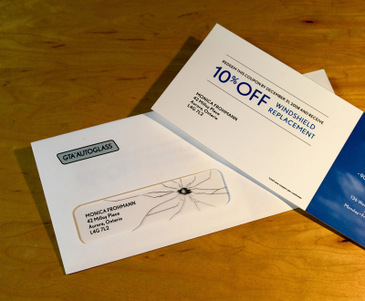
I came across an article recently that got me thinking. It was such a simple idea and yet made huge amounts of sense. It was all about enclosing some sort of direct mail with an offer in the same envelope as your invoice – a sort of mutli efficient, targeted, direct mail marketing campaign.

With postage costs on the rise and advertising budgets on the decline, why not use existing channels to ‘cross sell’ and/or ‘up sell’ to your clients?

An extra offer

Here’s an idea for people in my line of work – marketing. When invoicing a client for their new website, why not include a flyer in the envelope offering SEO, SEM and/or social media? The automotive industry are a very good example at using this sort of tactic where they tempt existing clients into doing more via things like redeemable vouchers for a service etc. Who knows, you migth be able to build up a very loyal client base who actually look forward to your next offer!

Additional tips on using this idea are to please consider using a large statement insert. Packing your mailing full of smaller inserts may seem more logical but research indicates larger inserts have higher response rates. Three panel lauout is most popular, followed by two panel. Order forms must be easy to fill out as well if you use them. Be careful to watch the weight of your mailing too.

Bath Marketing Consultancy works very hard to add value to the marketing process and utilising exisitng initiatives like this seems like a very obvious, but probably very underused route. Although I cannot take full credit for this idea and it is probably not original, it may well just remind you to use it!

Black Hat SEO

Be careful of the Black Hat

A malicious SEO poisoning attack, also known as a Blackhat SEO attack, occurs when hackers manipulate search engine results to make their links appear higher than legitimate results. As a user searches for related terms, the infected links appear near the top of the search results, generating a greater number of clicks to malicious Web sites.

SEO poisoning can be used to drive traffic to an intentionally created malicious site, or it can take advantage of existing and popular Web properties by using cross site scripting (XSS) on a legitimate site. One common SEO poisoning method used today is to take already existing Web pages where a file has been uploaded to redirect the user to a malicious site. As the site is known and has often been around for years, it appears legitimate when it comes up at the top of the search results. The cybercriminals exploit the input and display vulnerability on these sites. This malicious site could be anything from advertising cut price Viagra or offering to ‘scan’ your computer for malware for example.

By targeting the top Google searches, hackers are able to drive traffic to sites using highly popular search terms. The average number of malicious sites in any Google search using hot/trending topics (as ranked by Google), by the end of last year (2009), stood at 13.7% for the top 100 results. This means that for every 100 results – around 14 of the links suggested to you may be to a malicious site and not what you were searching for at all.

SEO poisoning attacks are successful because they move in quickly and move on just as fast. As soon as a malicious campaign is recognized and removed from search results, the attackers can automatically redirect their botnets to a new, timely search term.

In my time I have come across 2 examples of Black Hat SEO and in both occasions, the website owner was days away for being black-listed by Google. As both website owners ran their respective businesses online, this could have meant a complete loss of business for 6 months.

Be VERY careful when finding cheap SEO companies out there offering ridiculous promises such as ‘top of Google’ for £100pcm. They may well perform miracles initially, but can cause your site could irreparable damage. If you need advice, please get in touch with me via my website.


30 Questions to test you and your business

1 Can you and your team name three things that set you apart from the competition?
2 Do you communicate the benefits of your product or service in all of your promotional literature, websites, letters etc?
3 Have you tested Telemarketing to attract new customers? Did you accurately measure the results?
4 Have you tested Direct Mail to attract new customers? Did you accurately measure the results?
5 Have you tested PR to attract new customers? Did you accurately measure the results?
6 Are your ads powerful direct response ads that compel the reader to contact you – or are they mundane like all the competition?
7 Do you advertise in certain publications just because your competitors do? Social Media - Do I or don't I?!?
8 When you speak to a potential new customer, do you use words that set you apart from the rest and immediately capture the customer’s attention?
9 Have you tested pay per click search engine advertising?
10 Have you tested Internet Advertising?
11 Do you send regular email communications to your customers and prospective customers?
12 How much time each year do your key team members spend learning leading edge sales skills?
13 Do you have an excellent lead generation process in place?
14 Do you set up an ongoing communication with qualified leads consisting of phone calls, letters and emails?
15 Do you obtain and use testimonials from your best customers?
16 Do you have an excellent referrals systems in place?
17 Did you know there are more than 90 ways of obtaining referrals?
18 Do you offer something of value to your website visitors in exchange for their contact details?
19 Do you know how to write a press release to instantly grab the attention of the person reading it?
20 Do you personalise your email newsletters?
21 Do you know the most important piece of marketing information there is – your clients’ birthdays!
22 Do your team understand that the best way to sell is to ask questions?
23 Do you rent or purchase mailing lists of your target customers?
24 Do you take amazing care of your current customers?
25 Do you know why it’s important to include a ‘PS’ in all of your sales letters?
26 Do you communicate by mail, email and telephone on a frequent basis to your current customers to ensure they know what you have to offer?
27 Do you use just one or two ways of marketing to promote your business? Do you know why you should be using between six and ten?
28 If you used ten ways to market your business have you any idea how wealthy you would be?
29 Did you know that if you follow up a mailshot with a phone call you can increase response rates by 100 – 1000%
30 Do you realise that your competitors probably answered ‘no’ to even more questions than you did!

Now here’s a Free Tip. Pick just three of the above that are important to you and take some action today to improve those areas. Print out this article and come back to the checklist in the weeks and months ahead. You can use it as a very good way of measuring your progress as you implement the marketing strategies that are going to make a difference.

8 areas to consider when writing content

“Content is King” is something that is said with great frequency in the marketing world so I have put together a quick check list of things to keep in mind when you are writing for social media…

  1. Who is likely to be most interested in my content?
  2. Who do I want to communicate with and why?
  3. What kind of audience does this social community have?
  4. What are people currently saying about my website or business?
  5. Which type of person is likely to purchase my product or service?
  6. What tools or online services do my target audience use?
  7. Which websites does my target audience frequent on the net?
  8. What do my target audience have in common with each other?
If you would like to discuss your marketing requirements, why not drop me an email on paul@bathmarketingconsultancy.co.uk

Social Media – Do I or don’t I?!?

Yes or no?!

There has been huge ongoing debates about social media and whether it is a marketing initiative that business simply have to implement in order to succeed or something to scare mungering businesses into doing  and I would like to outline, what I believe are some of the key benefits.

By being active on social networking sites, a company is able to increase its awareness and hence its brand recognition. Familiarity with a brand or company helps breed sales.

You can improve your businesses reputation via your profile and contributing to relevant sites like online forums.

Social media DOES improve your businesses position within search engines. An example to check this is to create a ‘Google Alert’ for your company name and see how many times you are mentioned/picked up over a monthly period as a result of your social media activity.

Social media also means that you can attract the right sort of traffic to your website via the topics you post on sites like Twitter. Post links to your Tweets so that people can see what you are talking about; maybe even make a direct offer to your followers or ask them to re tweet.

All these bi products of social media activity can open more doors to your business and hence improve sales.

Surely this is what we are all working for in the first place?!?! Do you have any comments on this?