
The advert – avoid these mistakes & categories

The \”Tombstone\” ad

Following on from my post yesterday on the merits of advertising, I thought it was worth pointing out some of the traps that professional services organisations can fall into when advertising.

Firstly, most of the adverts I see are all very similar and more often than not, of poor or average quality. A lot of small businesses fall into the trap of buying advertising space and letting the media house that is selling the space do the design as it comes as \”part of the service or inclusive of the price\” – the deal clincher for the sales person. Be very carefull as most media houses are not your brand custodian and can make a real hash of your advert.

Continuing on that theme, when putting together your advert, categories to avoid falling into are :

  • The \”Tombstone\” ad – black & white, obituary-style. Yuk!
  • The \”Boring\” ad- offering nothing new, nothing enticing; blah, blah, blah…..snore!
  • The \”Over scripted\” ad – reams & reams of small print, cramming in as much as possible.
  • The \”Pompous\” ad – this is where the organisation simply boasts. i.e \’..we\’re number 1 in\’ or \’..we\’re the leader in the UK..\’
  • The \”Feature rather than benefit drive\” ad – \’..we do this\’, \’we offer that\’ rather than \’..we can help you for this\’ or \’..we can do this better, cheaper, faster that others….\’

And finally……….

  • The \”Metaphor\” ad – the horrible ad with a jigsaw with a piece missing or the staircase visual  with the heading -\’..we can get you to the top\’

My suggestion is to ALWAYS try and promote how what you are advertising can add value. After all, would any of the advert types I have listed above really influence a sophisticated buyer of professional services to change his/her decision?!

I am a big fan of the line \”people buy people\” (see my website) yet not enough people seem willing to get that personal chemistry across via an advertisement.

More advice to follow folks…..

The advert – avoid these mistakes & categories

The “Tombstone” ad

Following on from my post yesterday on the merits of advertising, I thought it was worth pointing out some of the traps that professional services organisations can fall into when advertising.

Firstly, most of the adverts I see are all very similar and more often than not, of poor or average quality. A lot of small businesses fall into the trap of buying advertising space and letting the media house that is selling the space do the design as it comes as “part of the service or inclusive of the price” – the deal clincher for the sales person. Be very carefull as most media houses are not your brand custodian and can make a real hash of your advert.

Continuing on that theme, when putting together your advert, categories to avoid falling into are :

  • The “Tombstone” ad – black & white, obituary-style. Yuk!
  • The “Boring” ad- offering nothing new, nothing enticing; blah, blah, blah…..snore!
  • The “Over scripted” ad – reams & reams of small print, cramming in as much as possible.
  • The “Pompous” ad – this is where the organisation simply boasts. i.e ‘..we’re number 1 in’ or ‘..we’re the leader in the UK..’
  • The “Feature rather than benefit drive” ad – ‘..we do this’, ‘we offer that’ rather than ‘..we can help you for this’ or ‘..we can do this better, cheaper, faster that others….’

And finally……….

  • The “Metaphor” ad – the horrible ad with a jigsaw with a piece missing or the staircase visual  with the heading -‘..we can get you to the top’

My suggestion is to ALWAYS try and promote how what you are advertising can add value. After all, would any of the advert types I have listed above really influence a sophisticated buyer of professional services to change his/her decision?!

I am a big fan of the line “people buy people” (see my website) yet not enough people seem willing to get that personal chemistry across via an advertisement.

More advice to follow folks…..

Advertising. Yes or no?

Standing out?

Can advertising generate leads? Should it be a part of your marketing activity? What type works? Some quite strong questions for a Monday morning!

I believe that that there are limited numbers of prospects who buy in the professional services arena and, the infrequency of their purchase decision making makes a strong case for not doing any advertising at all. After all, why do so few ad agencies advertise? Maybe there is a message in that!!

Of course, for many years, some professional services were not permitted to advertise for ethical reasons (i.e. the legal sector), but, when these restrictions were lifted, their first impulse was to rush into advertising. But they forgot about below the line activity.

My main interest in advertising is whether it can generate leads; whether it should be taken seriously as a response generator. Do prospective clients come knocking as a result of an advert or does seeing an advert leave them cold? To me, advertising is about ensuring that prospects see the added value working with you brings. However, there are some professional establishments simply advertise to satisfy their egos………….and to annoy their competitors!

There is one obvious situation where advertising would seem an obvious route to market – the launch of a new product or service……or what I like to call “Announcement advertising.” However, for this to be truly effective, the advertising needs to be full of flair and create a buzz around the market. I have tried to do this with my latest Bath Life advert promoting my website/CMS package using a chocolate cake.

Wherever possible try (as written about by a fellow Tweeter Andy from Pro Ipbx), and put a response mechanism in place to allow reactions to get straight back to you. Or, at least ensure that you find some way of viewing effectiveness. Maybe by simply asking enquirers or promoting a particular page on your website that can be viewed via analytics.

Although it is sometimes hard to quantify, I believe advertising does create curiosity. It can also lay the foundation for other marketing initiatives such as e marketing or direct mail. It can also generate real positive feelings internally from your employees by showing real commitment to the business and raising morale. Hmm, but does this answer the question of its use? Tough one.

There will be plenty more on this subject from me tomorrow and later in the week, but, what do you think? Let me know by leaving a comment. Let’s share experiences!

20 golden rules for running a successful business.

Below is a list of the 20 things to consider when running a successful new business programme:

  1. Plan
  2. Create a fire, it is not about flicking a switch and sitting back
  3. Invest your time as well as your money
  4. Treat your company as a brand – define it
  5. Remember marketing is more than just new business and sales
  6. Develop a clear vision
  7. Aim high – but try and factor in some sort of safety net
  8. It is better to do a few things really well than loads averagely
  9. Remember the competitive framework – be noisy in a loud market
  10. Treasure your database
  11. Test, Test, Test
  12. Use all the tools of the trade – don’t rely on one initiative
  13. Invest in your own development
  14. Consider contra deals with complementary businesses
  15. Selling a meeting is the only thing you can do initially
  16. Work hard at keeping your name in the papers = Press Relations
  17. Prepare
  18. Use thr right team
  19. Keep in touch with your contacts
  20. People give business to people who want their business

As mentioned, these are Bath Marketing Consultancy’s top 20 rules, but they might not all apply to you and your business. If you would like me to elaborate on any particular point, please get in touch with me.

Over to you!

Marketing is more than new business.

Although I am a great fan of business plans, it is having a marketing strategy that will make the difference to your business. Such a strategy should be based on the results of the research you have conducted. It should also include existing clients. There’s nothing worse that producing exciting promotional material aimed at potential clients (see last week’s Blog posts on “The Company Brochure”) and forgetting to circulate it to your existing ones. It goes without saying that existing clients are still going to be your mainstay; your foundation and must never be sacrified on the altar of new business.

Strategy
There will be people within your business who are simply not motivated by new business or even by the whole idea of marketing. You, yourself may be the sort of person who just sees marketing as increasing sales. This is not a crime! However, there does need to be a dedicated person to drive the marketing process forward and this someone can even be an external person such as a marketing consultant who you “tap into” when you need him or her.

I feel that there are 20 golden rules when looking at marketing and these will be posted later in the week.

Do you have any comments on this or any of my other posts? Please feel free to leave a comment or contact me direct via my website.

The Brochure Part 2 – A New Approach

Following on from my previous post, I think that the planning and the production of the company brochure should be the catalyst for producing a range of print material for the The Brochure Part 2 - A New Approachorganisation. I am talking about looking at corporate ID and other design issues such as stationary. Either way, my suggestion is to change the way you view printed material to try and produce genuinely client orientated, helpful material that will be collectable rather than binable.
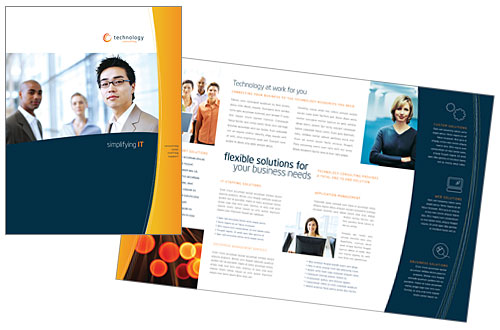

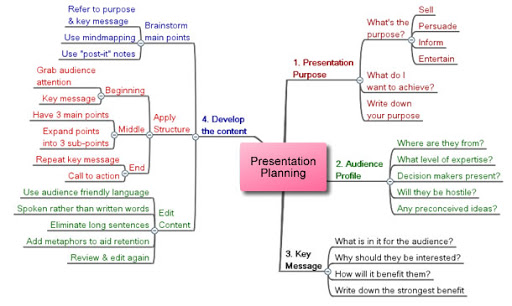
The aim should be that anything printed takes elements of your business and your expertise and, without telling everything, puts it at the client’s disposal  thereby offering genuine help in a convenient format. This should result in it being an efficient sales tool due to its appetite whetting and longevity.

In addition to the brochure, there are also other initiatives like the newsletter. This can be a valuable print tool if well produced. Most organisations find that contributors don’t meet your deadlines and that once a quarter becomes far from easy! Newsletters have to be single-mided and client orientated offering really up-to-date news, opinions, technical advice etc. They must avoid being ego massaging tools!

Whenever consideration turns to print material, the question of design rears its ugly head. Let’s be totally clear, I would never underestimate the power of design. It is undoubtedly a vital element in the marketing of your organisation. With design, you have the power to distinguish yourself from your competition. It is a way to reveal your personality – your brand – so get it right. Use a blend of house style and creative identity.

Print is very much a subject I could go on and on about, but I am hoping that this and the previous article go some way to helping you in your thought process.

Good luck!


The Company Brochure – Part 1

After nearly 20 years in the industry, I am not 100% sure why companies have such an obsession with a company brochure! Yes, by all means have one so that you and your staff have a leave behind, but it is very unlikely to be a means to winning new business i.e I doubt whether potential clients are going to make their selection of provider based purely on it. In my opinion, a company brochure is something that can act as a showcase for your business that organisations will treat as a calling card at best and junk at worst.

Looks great, but what do I do with it?!

Sorry to open with a bit of a downer this week, but getting the brochure to become a live entity can very often be the result of months of gestation within a business – a birth process that often produces great passion and/or great rifts as it is often an initiative driven by the MD, but becomes a committee process!

When the beautifully printed brochure finally arrives in their thousands in numerous boxes after vast expense, most companies have a question – “what do we do now?” The answer usually has a predictable logic: “well, there’s no point in having them here gathering dust, send them out.” This means that these expensive documents are sent out to anyone with their details on your files or anyone you have crossed paths with and guess what, nothing happens. No letters of thanks, no congratulatory notes and no new business.

In my experience most brochures are full of words like “we” and “me” meaning that they tend to concentrate on the business and what it offers i.e. “we do this” and “we have 20 years experience”…..

Does any of this sound familiar?

I don’t see the company brochure as a sales vehicle. I see it is as a way of showing your prospects what you can do for them. You MUST think about how you want to use them, what they will say and what they hope to achieve.

Tomorrow’s article will be Bath Marketing Consultancy’s suggestions on how to utilise the company brochure…..


During the pitch..

Following on from my last 2 posts, I thought I would continue with some more helpful tips about the actual pitch itself to help you get it bang on.

Enjoy it!

Firstly, if you are going to use charts and/or graphs, be creative. Keep them simple, clear and uncluttered. Do your upmost not to read them and simply talk around them. If you can, use recognisable logos to back up your experience and use multi media rather than powerpoint.

When pitching, one of the key things is to remember not to waffle. In my first ever agency pitch in London, I got very nervous, lost my way and managed to say “etc” about 30 times! Luckily my CEO stepped in and we managed to win the account!
Research has proved that a speaker has the whole audience’s attention for about 10 minutes, half their attention for the next 10 minutes and after 30 minutes, most of the audience are simply not interested and their minds are on other things.
  • Keep the focus on the client’s business – offer reassurances and demonstrate how you add value.
  • Try and make a key point every 3 minutes.
  • Get the pace of your delivery right and try not to use ‘umm’ as a filler.
  • Make sure you are heard by everyone and even try and get interaction from the audience.
  • Body language + eye contact are essential. Remember that the communication of your pitch is 58 body, 27% is voice & 15% is content.

A lot of the rest of my advice is obvious – try and enjoy it, remember that you are the expert, keep hands out of pockets, breathe deeply to calm nerves, if you get stuck – take a sip of water to catch up, dont be arrogant, stick to the timetable etc etc.

At the end of the pitch, CLOSE – ask for the business. Try and leave something behind like a brochure or a DVD of the presentation. When you get back to the office, review things and judge how you think you did………………and, if you win the business- CELEBRATE!!

I hope my last 3 posts helped you and please feel free to get in touch with my via my website or leave a comment below. Thanks for reading!

The pitch – structure and planning

While undergoing numerous sales training courses when I was working at the Sunday Times and then Miller Freeman, I was always told to :

  • Say what you’re going to say
  • Say it
  • Say what you’ve said

…in other words, remove uncertainty at the start, move on to the detail and then drive the message home via repetition!

    Always plan.
However, following on from yesterday’s post, please find a list of tips that I find help give structure and clarity to a pitch.
  1. Give it a title
  2. Write down in a single sentece what you want to get across to the audience – the “theme” of your pitch.
  3. Give a role to each speaker – DON’T use your MD all the time just because he/she might be a good presenter. Keep in mind that a lot of the pitch may hinge on systems and/or processes so ensure that that person has a definable role within the pitch.
  4. Try and avoid showing an organisational chart.
  5. Use case histories/studies to reiterate your point, but be careful not to give any sensitive information away.
  6. DON’T lie!
  7. Prepare, prepare, prepare!!
  8. Rehearse, rehearse, rehearse!!
  9. Try and pre-empt any questions and harmonize your answers.

Finally, make sure that you demonstrate how you and your organisation can help the client i.e. outline the benefits NOT the techniques you will use.

More on how to use props and the actual steps to take during the pitch later in the week. If you have any comments or questions, please leave them below or get in touch with Bath Marketing Consultancy direct via the website.

The beauty parade – before the pitch

In contrast to a credentials presentation or document where the content is usually decided by you, the competitive pitch is led by the client brief. Since this is something you should always receive in advance I am going to split my advice between what to do before the actual pitch and then what steps to take during the pitch itself.

Of course, all pitches are not the same, but my suggestion is to use the below steps as a sort of checklist.

Before the pitch – 

Discuss with your team.

1)Clarify and (if necessary) challenge the brief. Make sure that you understand EXACTLY what is required by who and when. In my experience, it always helps to try and start a dialogue with the prospective client before the actual pitch so call your contact, build a rapport by asking questions. In addition, try and get a timescale and a budget.
2)Determine their attendees. Who is going to be there on the day and possibly their job titles. NEVER have more of you than of them.
3)Plan your team around the response from the above point. Who of your team is the leader. Your leader doesn’t have to be the CEO or MD as the pitch might be based on client services or even creative so match the needs of the client to the correct person in your organisation. 
4)Send your team CVs in advance together with any background literature and decide what you are going to leave behind.
5)Know your competition. This is not always possible, but if it is, prepare comparisons with them and try and present last.
6)Travel to the pitch is essential. Always try and travel in the same car and get there early enough to set up. There is nothing worse that setting up while the client is in the room waiting for you!

These are just a few tips on what to do beforehand. The next post will centre on the pitch itself…..