How to cope with rejection!

When touting for business, do not underestimate the benefit of picking up the phone. We all know how thick skinned you have to be to undertake this sort of activity, but, with preparation and a calm head, you can really make your mark and experience good returns from making a cold call.
What I thought I would do in this post is put together a way of dealing with some of the most common “rejections” you will encounter when making the “cold call” as a way of helping you feel more confident about making one.
Avoid rejection

So……what is the most common objection made to the cold caller?

In my experience, it is the “I am happy with my current company.” NEVER say otherwise or try and put down the existing supplier. A way of opening the door is to say “Fine, they are a good company and I know of them. However, I’d simply like to meet you to show you our new services so that in the future, you are in the best position possible to evaluate between agencies……”
Secondly, another main objection I have encountered is the “I don’t have the budget” reply when asking for a meeting. Again, acknowledge this objection, but counter it by saying something along the lines of “I take your point and appreciate budgets everywhere are not as they used to be, but we have made some changes in the way we price our services and I think that, when we meet, you will be pleasantly surprised at how competitive we are.”
Thirdly, the next in line is usually, the “I am too busy” objection. A reply could be “I understand that diaries can be very busy at this time of year, but mine is open for 3 months so how about we put something in for 3 months time and speak nearer the time? That way we will both be able to clear the decks and hopefully be less busy.”
Fourthly there is the old “put something in the post” reply when asking for a meeting. What I would do is let the prospect know that your services are tailored (as Bath Marketing Consultancy‘s are!) so you would prefer to meet up even it is just briefly to find out more about……..”
Fifthly, and by no means lastly in terms of it use, is the “I’m not in the market” response. My suggestion would be to flatter the person at the other end of the phone and say “I would have been incredibly fortunate to catch you at the exact time you were reviewing your XXXXX, but there are several new aspects to what i do that I would like to make you aware of for the time when you are reviewing.”
There are many more including getting passed the dreaded pa/secretary or answerphone (see my previous post on this http://www.themarketingexpert.net/2010/12/overcoming-dreaded-answerphone.html) but the above represent what I feel are the most common.
Hope they help.

Design and corporate identity

Whenever you start thinking about corporate material, the question of design will rear its head. i.e do we use a new style; do we buy in someone to help, what style do we use etc. The next step usually is to review your corporate identity.
Yes, design undoubtedly has a vital role in the presentation and marketing of your organisation.

It is a key means for you to try and distinguish yourself from your competition. It is also a way to reveal your organisations’ “personality.” Traditionally the mix of your identity and house style will feature on your logo and corporate ID such as letters & faxes (if you still use fax!) as well as documents, proposals, stationary, leave behinds, creds presentations etc.

Under such circumstances it is crucial that any review comes from the person at the top of your organisation and, in Bath Marketing Consultancy’s opinion, that high quality outside professionals are brought in to handle the exercise. The need for authority inside and outside your organisation is because this operation is almost certain to result in proposals for some sort of change and this “change” may not be something everyone wants to undertake.

So…if you are to go down the professional route, a full and clear brief must be given to the company selected. This brief should focus on the personality of your business i.e. what does your brand stand for? Remember that design should work at an emotional and rational level so try and consider these aspects in your brief. It might even be worth collecting (subtly!) examples of what your competitor’s literature looks like as well as other examples from different sectors you like. When Bath Marketing Consultancy puts together initiatives like websites or marketing literature, we always do an audit of the existing material and then ask for a steer from clients as to what they like before putting together initial design ideas.

I would always advocate listening to the rationale from your designer and then taking a long term view when making decisions. I am all too aware of the difficulties of decision by committee, but make sure that your designer has identified who you are and what you stand for.
One area Bath Marketing Consultancy tends to insist on is some sort of style guide for a signed off logo which gives consistency across ongoing marketing material……and stops staff playing with the designs!

Finally, marketing initiatives like brochures might have a long shelf life so my suggestion would be to keep names of personnel out of the design (unless the details are yours and you own the business!).

Good luck!

Client reviews = good for marketing

Assuming that you delivered on the promises you made when starting work with your customers, you will continue to keep them happy between projects the same way you won them in the first place…….by being helpful, professional and accessible.

My suggestion is dont just send out a questionnaire or a sporadic newsletter as part of your marketing activity. Make time and effort to actually see customers even if they aren’t actually giving you “live” work. Maybe even ask for an in-depth client review meeting where both parties can re establish the face to face dialogue and properly go over past work and possible upcoming opportunities. Maybe audit any recent activity or even review what you have done (after all even the BBC reviews their website every 18 months!).

I would think that getting repeat business from customers would be a requirement as a minimum, but keep in mind recommendations that they may give to their contacts as well. In Bath Marketing’s opinion, you must give yourself the best chance to expand with your clients as they expand so staying in touch and the methods for doing so, should be something you have a plan for in your marketing plan.

However, always do an internal review before this sort of meeting so that you can assess the real monetary value of your client to your organisation (not all clients are actually profitable in my experience!) as well as the possible cross selling opportunities. My old MD used to really push KIT (keep in touch) and I have to say that I fully agree with him!

Running a Seminar as part of marketing?

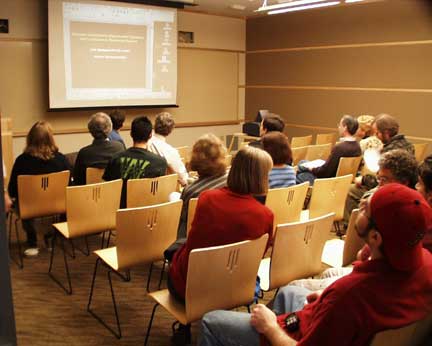
The decision to run a seminar should not be taken lightly. It is very likely that you know your subject matter inside out and could pull together a presentation very quickly, but a seminar is a tool that is used to enhance your reputation so care, attention and in particular, preparation should be taken. There might be an argument for a conference rather than a seminar as this would imply that you are on a major marketing push and have reputable speakers from outside your organisation. 

Seminar or conference, it is all about making it a success and it is not as easy as it seems. Once you have fixed the date, it is going to happen! You cannot postpone or cancel as this would have very negative implications for your business, so plan ahead and here is my checklist:

Choose the actual title with care; make sure that you are offering something valuable like “how to achieve…….” or “The benefits of …….”
The venue is paramount. Make sure you visit in advance and have good audio visual equipment (if required).
What about the parking, signage, cloakroom facilities, refreshments etc
Produce formal invitations that are sent out in advance and that specify format, content, directions, timings etc
Follow up your invitations by telephone! (obvious, but very often missed)
Chose the best date (avoid start or end of the week, national holidays etc)
Try and give at least 6 weeks notice of the event to your invitees
The location must be accessible with parking & possible overnight accommodation if required)
Make the timing of the event comfortable – not a whole day of non-stop talking
Use outside speakers if possible to add credibility
On the day of the seminar/conference, make sure you have enough staff on hand as well as badges for the delegates – remember they are unlikely to know each other!
Make your leave behinds good

In other words, if you are going to invest time and money into this sort of marketing activity, do it properly and for the right reasons. I feel that one of the best ways of achieving success is to get a professional company/organiser in to arrange the event……………….and a professional marketing company to do the marketing!

SEO is not just a box ticked

When it comes to getting the best from your website, a lot of emphasis should be placed on how it performs in search and, just as you’d expect to scope out a website design and development project, so too must you scope out a search engine optimization effort.

In Bath Marketing Consultancy’s opinion, SEO shouldn’t be something that is just asked for as a generalist service from marketing companies. It is an essential part of online marketing and, if organisations are prepared to spend money on their websites, they should also be spending money on ensuring that the site is found.

So, questions that I would normally ask clients and/or prospects are –

  • Who’s going to write the content?
  • Who is responsible for PR efforts?
  • Who is handling social marketing?
  • Who’s doing link building?
  • Who’s restructuring the website, as necessary?

Yes, the foundations can be done during the actual website build, but ongoing SEO is the key to success. Work with a specialist, agree a budget, allocate who is doing what and then work together to achieve your goals.

It’s noisy out there!

To be blunt, it is noisy out there in the market you operate in. If you are in charge of a business or its marketing, collect what you receive in the post or via email in a month and see how much stuff you receive. Some of the larger companies I have worked with conducted this little test and one person presented me with a crate of stuff! Literature had come in all shapes and sizes; from postcards to full glossy brochures, from free samples to letters almost begging for business! Plus there was the trade/professional magazines that had landed on her desk complete with their own advertising, tips, inserts, CDs etc. 

Make some noise!

When it comes to marketing, how are you going to make an impact in an environment that is so busy??! In my opinion, too often marketing plans seem to be put together in a dark room without any real attention being paid to the noisy environment in which they will have to function. Do not take it for granted that the prospect you are trying to get hold of is just sitting at their desk waiting for you to get in touch with them and once you have, they will give you all the time you need to close the deal! 

You must shout to get heard; you must fight for their attention and aim to be remembered. A possible plan should be put together to cope with all the surrounding noise from others. Queue jump if need be to get ahead of others. Sometimes being too polite and hanging back will allow someone else to jump in and get that meeting.

Make your marketing simple, clear and easy to differentiate from the noise. 

Need help? Get in touch with Bath Marketing Consultancy and we can do a marketing audit for you for a fixed fee.

Pretty pictures vs making marketing work

Some might see this topic as controversial, but my aim is to show that having a beautiful logo, a “creative” advertisement and/or a pretty website is not necessarily going to mean a fast track to early retirement! I have spent my career “debating” the importance of creativity with numerous creative directors and, as yet, opinions still differ.


What I am saying is that, in my opinion when it comes to the pecking order, producing an effective marketing platform like a website is more important that what it looks like. Why? Because I feel that design is so subjective. What a designer may like or what an MD of a company might like may be totally different to what a customer or prospective customer may like. This is where testing can play a major part.

Dont be too “arty”

The key area for me is ensuring that the initiative ticks certain boxes BEFORE the creatives get hold of it! I am not devaluing the importance of visual impact (after all, there are awards ceremonies for creativity and not strategy!); more that, if a website doesn’t take the browser on a journey and/or answer all their questions, they are not going to interact with the site. Thus, do a site map for a new website before the initial design.


In addition, the trend a while back was for having an advert with lots of “white space” which meant that essential information that the buyer needed may have been left off. e.g Dont assume just putting a website address or a facebook page will suffice vs showing your full contact details!  


Similarly, never underestimate the importance of good copy. Some businesses are very quick to dismiss content in favour of doing it themselves, but a business owner is unlikely to write about their business in the correct way that attracts a potential customer.

When communicating with customers, give them enough information to make a decision. Yes, make the look of the advert or the website or the exhibition stand inviting, but try not to dwell too much on the look. 

It is the job of the marketing consultant to get under the skin of an organisation; i.e. get to know its personality, its customers, its target market and then put together its brand identity and USP.

I know there are lots of designers out there who may disagree so I would be interested in hearing any comments.

The Marketing tools of the trade

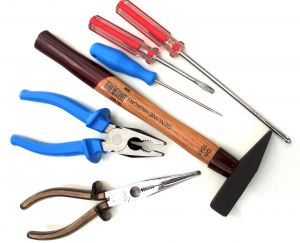
Marketing is a multifaceted process. It offers a wide range of tools for placing your service/product in front of clients and prospects. The main “tools” available are:

The web
Cold canvassing
PR
Advertising
Direct Marketing
Print
Conferences, seminars, exhibitions etc

Bath Marketing Consultancy suggests you use them all! If each tool is used for the right purpose, has the right objective, at the right time, for the right TA, they could be incredibly effective.

Before you say anything, I appreciate there are other marketing tools that I haven’t mentioned such as telesales (or telemarketing) which is ostensibly phone canvassing. However, there are 2 types of telesales, 1) is closing a sale and 2) is closing an appointment. The skills required for both to achieve success vary, i.e. to close a sale, you might use an introductory offer. To close an appointment, you may well use “I am in your area….”

The tools of the trade!

One initiative that may well yield results is client entertaining, but be careful that it doesn’t appear like bribery!

What marketing tools do you use and what works best? Feel free to leave me a comment.

Seasonal marketing

Do you experience seasonal fluctuations with your business? If so, you are not alone! One of the trends that Bath Marketing Consultancy is experiencing right now is enquires from people experiencing just this; a period of downtime in their businesses due to the (supposed!) British summer.

Summer?


What these people seem to be saying, quite correctly is, “yes, I know the summer impacts on my business, but I am going to lay the marketing foundations for the Christmas period and get in touch with a marketing professional to help me.”

Fluctuations in a business are very hard to predict exactly, but there are times of the year when traditionally businesses will be quieter than others. For example, December and January tend to be quiet as the “silly season” is in place. In addition half terms, school holidays and then summer holidays. In fact, there may well be less of a buzz about in business when major sporting events are on like the Rugby World Cup, Football Cups, Olympics etc.

During these times business is likely to be slower, enquiry rates may well fall and invoices take longer to be paid. We are all in the same boat! The trick is to make sure that you have a consistent marketing plan that will continue marketing your business during these quiet times.

You could look at bursts of marketing activity before these times or incentivising prospects to commit to working with you before they go away or take a holiday. Similarly, there is always the option of you mirroring these quiet times by taking time out too. 

One key area I would suggest is do not go quiet yourself with your own marketing or you risk going of radars. Yes, there is a possibility that the markets you appeal to may well become smaller in seasonal fluctuations, but there will still be a market there for you to talk to. So do not stop Blogging, Tweeting, Advertising, Link Building etc as continued marketing and brand awareness activity over a sustained period of time really pays dividends.