The pitch – structure and planning

While undergoing numerous sales training courses when I was working at the Sunday Times and then Miller Freeman, I was always told to :

  • Say what you’re going to say
  • Say it
  • Say what you’ve said

…in other words, remove uncertainty at the start, move on to the detail and then drive the message home via repetition!
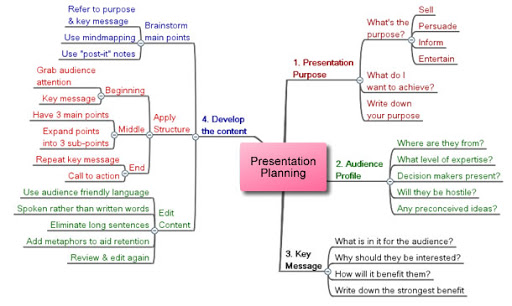
    Always plan.
However, following on from yesterday’s post, please find a list of tips that I find help give structure and clarity to a pitch.
  1. Give it a title
  2. Write down in a single sentece what you want to get across to the audience – the “theme” of your pitch.
  3. Give a role to each speaker – DON’T use your MD all the time just because he/she might be a good presenter. Keep in mind that a lot of the pitch may hinge on systems and/or processes so ensure that that person has a definable role within the pitch.
  4. Try and avoid showing an organisational chart.
  5. Use case histories/studies to reiterate your point, but be careful not to give any sensitive information away.
  6. DON’T lie!
  7. Prepare, prepare, prepare!!
  8. Rehearse, rehearse, rehearse!!
  9. Try and pre-empt any questions and harmonize your answers.

Finally, make sure that you demonstrate how you and your organisation can help the client i.e. outline the benefits NOT the techniques you will use.

More on how to use props and the actual steps to take during the pitch later in the week. If you have any comments or questions, please leave them below or get in touch with Bath Marketing Consultancy direct via the website.

The beauty parade – before the pitch

In contrast to a credentials presentation or document where the content is usually decided by you, the competitive pitch is led by the client brief. Since this is something you should always receive in advance I am going to split my advice between what to do before the actual pitch and then what steps to take during the pitch itself.

Of course, all pitches are not the same, but my suggestion is to use the below steps as a sort of checklist.

Before the pitch – 

Discuss with your team.

1)Clarify and (if necessary) challenge the brief. Make sure that you understand EXACTLY what is required by who and when. In my experience, it always helps to try and start a dialogue with the prospective client before the actual pitch so call your contact, build a rapport by asking questions. In addition, try and get a timescale and a budget.
2)Determine their attendees. Who is going to be there on the day and possibly their job titles. NEVER have more of you than of them.
3)Plan your team around the response from the above point. Who of your team is the leader. Your leader doesn’t have to be the CEO or MD as the pitch might be based on client services or even creative so match the needs of the client to the correct person in your organisation. 
4)Send your team CVs in advance together with any background literature and decide what you are going to leave behind.
5)Know your competition. This is not always possible, but if it is, prepare comparisons with them and try and present last.
6)Travel to the pitch is essential. Always try and travel in the same car and get there early enough to set up. There is nothing worse that setting up while the client is in the room waiting for you!

These are just a few tips on what to do beforehand. The next post will centre on the pitch itself…..

Seminar or Conference – how to make it a success

Outline the benefits

This is not as easy as it seems, especially when you consider how many are available at one time. In addition, once you have set the date it is going to happen, whether you are ready or not! Deadlines just have to be met and planning is vital so here is Bath Marketing Consultancy’s checklist:

Choose the title with extreme care – It needs to offer something valuable to the audience not just be a sales platform for you and your business. I suggest a title along the lines of “How to…..” i.e the benefits rather than the “We do this…..” type of approach.
Venue – select on the basis of audience (i.e size and type) and your budget. VISIT IT IN ADVANCE to ensure it is appropriate, has good acoustics, air conditioning, good service from the staff, blackout facilities, toilets etc.
Invitations – these should be quality and well produced invitations not just a piece of A4 with lots of words on it about you. These have to be sent out a long time in advance; 2-3 months is about right. Always specify the day, time, contents, directions, parking facilities etc.
Follow up – always telephone as a follow up as opposed to just an email or an e shot.
Day/Date – believe it or not, this can have a massive impact on attendance. Avoid Mondays or Fridays. Obviously avoid National holidays!
Location – again, this is very important. Chose somewhere easy to reach and maybe somewhere where overnight accommodation is available.
Timing – my suggestion is not to run a seminar for a full day on one topic. Offer a morning only starting at about 10am and run until 12.30pm and provide a buffet!
Outside speakers – these really add credibility especially from a client side so maybe look to team up with another business. It also means that the audience wont get bored of one topic. (I ran a seminar on website design and content management and brought in my SEO expert = a natural partnership).
On the day – make sure you arrive early to test everything and then have sufficient staff on hand during the event. Maybe have handouts, badges etc.
Copies of the material – make these accessible, but possibly as a download from your website!!

In summary, if you are going to run an event, do it properly and professionally or risk some serious consequences. You want to be remembered for the right reasons and, if done successfully, a seminar can make a real positive impact on your business.
Need help? Get in touch with me via my website….


Direct Mail – have you used it?

About a year ago, I wrote an article giving tips on how to use Direct Mail as an effective marketing initiative, but I have come across a lot of cynicism recently about its place within strategies.

As I tweeted earlier this morning, I believe there is no such thing a junk mail – only mail that is badly targeted and misdirected. In my opinion, ALL mail has the opportunity to be impactful and interesting and it is your job (or the job of your marketing company) to make it so. Even to throw it in the bin requires an action from the recipient and therein lies the opportunity!

Your prospect probably receives 100lbs of unsolicited mail per year comprising of 500+ items. Ask yourself why your mailshot should be treated differently from the rest? If you send 10 items of literature to perfect strangers, two of them will be binned unopened, another two will be opened but not read. This leaves roughly six that will be looked at. MAKE YOURS STAND OUT!

Out with the ‘junk’
About one-third of mailshots are wrongly addressed. This is something that will have a serious impact on response rates. In addition, do not address your mail shot to ‘The Owner’ or ‘The House Owner.’ Try not to make your mailshot look too much like mail they haven’t asked for; consider all possibilities for personalisation – a handwritten envelope, use a Christian name, use a stamp rather than franking etc.
As we all know timing is essential. Try and avoid any seasonal influences (i.e. half terms). A lot of companies also match their finacial years to coincide with the standard financial year so avoid making offers in March; allow sufficient time to get into peoples’ diaries before budgets are set.

Language is also imperative. Use good English. No mistakes, be brief and to the point and avoid the unclear and ambiguous message. Also, if money is tight, try contra deals with someone else where 2 businesses run a campaign together (e.g web design & SEO) and make the offers interesting, relevant and original.

Statistics say that successful direct mail marketing will yield a 2% response rate. In my opinion this is rubbish. All you need to know is the profit per reply. Ask Johnnie Boden how direct mail works for his business.

Need help? Why not ask me?

Breathe for a Change

After a great 10 minute presentation at a recent networking event in Frome, I asked the speaker Mr Ken James, if he would like to write a summary so that I could post it onto my Blog as I felt it to be of great importance and relevance to us all.

So………..below is a very important article about how such a simple act as breathing can make a big impact on your work and home life:


You can survive for 3/4 weeks with out food, 4/5 days with out water but only 4/5 minutes with out air.
Breathing is the most important thing you do.

Most people only take in around 2 litres of air on each breath when your lungs hold 7 litres.
Most people breathe into the top of their lungs when the most efficient place to breathe is into the lower lung as that is where the largest amount of oxygen can be transferred into the blood stream. Oxygenated blood is what breathing is all about. Oxygen travels around your body feeding the cells, removing toxins and keeping you healthy.
The top of your lungs are associated with the sympathetic nervous system, the fight or flight response. Adrenalin is activated and you are on alert.
The lower part of your lungs is associated with the parasympathetic nervous system and is about being calm and relaxed.
The best way to breathe then is into the lower lung.
Another reason to use the lower lung is that the lymphatic system of your body does not have a “heart” to pump lymph fluid around your body, that is done by the diaphragm and so lower lung breathing exercises the diaphragm and so also aids the release of toxins from your body.
When you breathe you should use your nose for both the inhale and exhale as your nose has receptors that release endorphins that are 10 times more powerful than morphine to keep your body relaxed.
20 percent of all the oxygen you take in goes directly to your brain so when you breathe deeply you give yourself more thinking power.
Smoking limits the oxygen to the brain and so reduces the thinking processes. Smoking relaxes you because it stops you from thinking unwanted thoughts.
Breathing exercises can help you de-stress and improve your life in many ways.

For more information and breathing and its many benefits contact Ken James at ken@lovedayjames.co.uk or on 01373 834575 mobile 07799 677032

What do you think readers? Serious food for thought eh?

Cheap can be expensive

Firstly, let me apologise for my lack of Blog activity this week. It has been one of those weeks where, despite my best efforts, time has been in short supply. In addition, when Blogging, I think it essential to post information that is both relevant and helpful. In this case, I wanted to share something about recent experiences with those of us who operate in a service industry.


Cheap?!
In a nutshell, I seem to be coming across a lot of prospects recently who have identified that their marketing activity is not performing and who want to talk to me about what I suggest to improve things. This is itself presents a dilemma. The reason for this is that, my primary offer is that of ‘time.’ As explained on my website, I am not a business offering a single marketing initiative. People like me, who offer an initial service based on time undertaken, generally have umpteen years of hands-on experience and this experience is incredibly valuable and is therefore accessible at a price. But when does this become enforceable? Where does the free advice over a coffee, become a paid for service?

Tough to answer..

Anyway, in order for this business model of ‘pricing a service’ to be successful, any ‘service’ must be easily identified and it is up to us to demonstrate the added value it brings thus making it an attractive proposition. This is what I call practicing what I preach or…………’effective marketing.’

I quite often ask people whether they would go through a divorce and do all the legal work themselves. The answer is unequivocally ‘no’ they would seek the expert advice from a solicitor. If you apply this to marketing, would you (the prospect) do the most important part of running a business – marketing – on your own? For some reason, a great deal of SMEs decide that they will decide what marketing they need and then implement initiatives themselves.

This is where saving money or perceiving to save money, can actually be very expensive. Are you qualified to do your own marketing? Do you know what initiatives are available? Do you fully understand that a brand is not just your logo? Do you actually have a USP?

My suggestion has always been that, if you are a business offering a service, make sure that prospects can see that what you are offering will make a positive difference. SMEs don’t be afraid to talk to a marketing person as he or she should be able to add real value to your marketing and/or give you valuable pointers……..

In my opinion, you can be best friends with a butcher and receive the odd sausage for free, but when it comes to sirloin, you have to pay for it!

What do you think?? Leave me a comment or put me to the test by filling out my form.

What about advertising??

There are a number of conflicting reports and discussions about the merit of using advertising in your marketing activities so I thought I would outline my some of my thoughts on this subject and you can then judge for yourself.

Personally, I feel that there are difficulties assessing the effectiveness of advertising as a lot depends on their content and aims especially as some campaigns can have a delayed impact. For example, the message within an advertising campaign can be to invite prospects to apply for further information. In addition, certain advertising campaigns are run purely to create brand awareness of a service or product.

There are ways, however, of testing advertising and the main one is to run what is called ‘direct response’ advertising. By this I mean, running advertisements that make a straightforward appeal. A classic example of this is the retail sector advertising a specific product like a sofa at a given cost.

I see the objectives of advertising as possibly 7 things:
  • To support – an existing brand by stressing its advantages
  • To attack – directly or indirectly, a competitor and attempt to increase market share
  • To increase sales – via maintaining and then increasing market share
  • To co operate – with producers of jointly used products (e.g the automotive industry)
  • To appeal – to a new market segment
  • To convey – an image of the business rather than the actual product (e.g Green companies)
  • To support – a particular marketing strategy (i.e. run in conjunction with other initiatives)
  • To support (2) – a decision to buy after the purchase has been made
Some people argue that advertising is something that can be very fundamental to a marketing campaign. Others would say that it is pointless.
In my opinion, I think there will always be a place for advertising, but its costs may make it a thing of the past especially when comparing it to online marketing like SEO and SEM.
What do you think? email me at Bath Marketing Consultancy or leave me a comment below.

The high’s and low’s of being in business

Most of the Blogs I write are dedicated to helping people with their marketing; giving advice based on my experiences gained from over 17 years in the industry. This time, I want to share with you some tips on how to cope with the good and the bad times.

As I have Tweeted and Blogged about numerous times, I feel that marketing is an integral part of whether a business succeeds or fails. Every business needs marketing. Not just knee-jerk marketing, but proper planned marketing. Similarly, every business needs customers. Every business needs money.

Having been in business for myself for 12 months now, I too have experienced times when I have considered going back to full employment with my tail between my legs. Each time I feel like this it is down to something that hasn’t gone my way; something that has left me feeling low and demotivated – see this Blog about the Marketing Thief.

However, the key to turning things around is to remain positive. Go back to your marketing plan and step it up. Marketing is an initiative that depends on being consistent and persistent to be successful and even people who know what they are doing experience huge swings in their businesses.

Of course, I am bound to say talk to a marketing expert to get your business back on track and on the radars of more people. But sometimes it can be as simple as talking to other people at networking events. Share information. Share experiences. What I did was have a real hard think about my business and the value I bring to the marketing process. I know that the work I do makes businesses money so maybe it was a question of me being more visible and ensuring more of the right people knew what I bring to the table? Maybe I needed to be clearer in what I do and offer?

I decided to step up my social media activity. I went to more networking events. I also spoke to my existing clients to get more testimonials. I implemented a CMS to my website allowing me to change content and reinforce. The result – the busiest April of my career.

Be flexible in your marketing and keep doing it. DON’T sit back just because you are getting good referrals this month. Market your business now and it will pay off. Oh, and I am here if you need me!


The high\'s and low\'s of being in business

Most of the Blogs I write are dedicated to helping people with their marketing; giving advice based on my experiences gained from over 17 years in the industry. This time, I want to share with you some tips on how to cope with the good and the bad times.

As I have Tweeted and Blogged about numerous times, I feel that marketing is an integral part of whether a business succeeds or fails. Every business needs marketing. Not just knee-jerk marketing, but proper planned marketing. Similarly, every business needs customers. Every business needs money.

Having been in business for myself for 12 months now, I too have experienced times when I have considered going back to full employment with my tail between my legs. Each time I feel like this it is down to something that hasn\’t gone my way; something that has left me feeling low and demotivated – see this Blog about the Marketing Thief.

However, the key to turning things around is to remain positive. Go back to your marketing plan and step it up. Marketing is an initiative that depends on being consistent and persistent to be successful and even people who know what they are doing experience huge swings in their businesses.

Of course, I am bound to say talk to a marketing expert to get your business back on track and on the radars of more people. But sometimes it can be as simple as talking to other people at networking events. Share information. Share experiences. What I did was have a real hard think about my business and the value I bring to the marketing process. I know that the work I do makes businesses money so maybe it was a question of me being more visible and ensuring more of the right people knew what I bring to the table? Maybe I needed to be clearer in what I do and offer?

I decided to step up my social media activity. I went to more networking events. I also spoke to my existing clients to get more testimonials. I implemented a CMS to my website allowing me to change content and reinforce. The result – the busiest April of my career.

Be flexible in your marketing and keep doing it. DON\’T sit back just because you are getting good referrals this month. Market your business now and it will pay off. Oh, and I am here if you need me!


What is a site map and do I need one?

Bath Marketing Consultancy have been asked a number of times recently about this subject so thought I would put together a brief explanation for you.

Basically, a sitemap of a website is similar to the table of contents of a book. Sitemaps are important because it guides web surfers to the particular part of the website they have a point of interest in. With it they would save time following links and get right to the point instead.

Sitemaps are also where search engines look at if somebody is looking for a particular keyword or phrase. If you have a site map, you can most likely be searched.Creating a sitemap, now with software technology surging in, is relatively easier than before. You need not be a programming guru to be one. All need is a notepad, a program editor, and some patience.
Here’s how you do it:

Where am I??
Create the listing on a notepad.
It doesn’t necessarily have to be a notepad. Any word processing program will do. First off, make sure to type in all the parts and pieces of your website. Include all pages and all links you have. Create it as if you listing the contents of your book. Make a draft first. You’re sure no to miss something out this way.

Create a new page for your sitemap.
You can insert the sitemap on your website on one of its pages or you can create an entirely different page for it. Using your notepad, incorporate all tags necessary to it to make another webpage. Open up your website creator program and tag your sitemap using it. If you have created your website on your own, this will be easy for you.

Create a link for the sitemap.
You won’t be able to view the sitemap if you won’t put a link for it, of course. Create the link on the front page of your website so that visitors can view it right away and be directed appropriately.

Check your work.
It is important to validate the functionality of the links you created on the sitemap. Test each and every one in there and if you get an error, be sure to fix it accurately. Run through every page to make sure that all are accounted for. Check every single page to make sure that all are accounted for.

Upload your work.
Place the sitemap now on your live browser and double check it. It should function as smoothly as the dry run. Error should be minimal at this stage since you already have verified it locally.

The steps provided herewith is the manual way of creating a sitemap. These days, if you search hard enough on the web, you will find online programs that will do all these work for you. All you have to do it type in the URL or the link of your website and they will create the sitemap with click of a button.

Need help? email me paul@bathmarketingconsultancy.co.uk