Don’t be afraid to test

As the title says, don’t be afraid to test new ideas when it comes to marketing. Marketing theory is all built around the principle of pre testing especially since the financial commitment and risks involved in mass marketing can be large. Therefore, why not look at small scale evidence as a precursor to anything larger?

Many of your proposed initiatives may well be accessible to small-scale, toe-in-the-water trials which could be evaluated before a full commitment of that initiative is made.

For example, mail shots. These can be pre tested on a small section of your database or a mailing list and the reactions monitored. By keeping the postage cost and print run small, anything negative could be restricted to a few tens of clients/prospects. Similarly, if you wanted to use a new presentation or creds document, why not test it with existing clients initially?

For advertising, company identity and literature, unfortunately the commitment is likely to be all or nothing. This doesn’t however, stop you approaching to a sample of clients with something rough or unfinished to test the concept. But…….you must be prepared to act on this feedback even if it halts your creative juices!

When it comes to testing your marketing, remember the customer is always king; accept their verdict and go back to the drawing board if necessary – your next idea will be even better for doing so!

Remember the competitive framework

Yes, I know I’ve said it before, but…..I do think it deserves repeating.
Everything you do in your business is very likely going to be released into a noisy world; a world full of competition and a world where some people will have more money than you. So, to be successful and to give yourself the best chance possible, be creative, be loud, be professional and, above all, try and be different. This is not Bath Marketing Consultancy trying to scaremonger you or us trying to make a plea for you to make an appointment to see us – it is a must. If not adhered to, your message will drown and you marketing budget will likely drown too.

Also, please consider professional help. You cannot be an expert at everything. We outsource our accounts, some of the legals and contract work that needs doing when running your own company as well as some of the initiatives we advocate such as print and media.

It really is a false economy to try and do things on the cheap and in house, especially when it comes to marketing. Yes, you may be able to write a good line or you may even be able to draw a bit, but his doesn’t make you a creative or a marketing professional. Nor, to be honest, does it make you objective. An outsider really can reveal new insights and create a revolutionary approach that will really impact and shake up the market.

Good luck and I hope this helps.

Annoying TV ads

I can safely say that there are a number of TV ad campaigns running at the moment that are simply baffling to me in terms of their messaging, their content, their scripts and their all round presentation and I wonder why the agency who did them would even present them to their client not to mention why the client would’ve signed them off and handed over a (presumably very large) cheque.

For example, why oh why did Enterprise Car Hire sign this one off? How annoying is it?

Also, what in the world of sports is the new Compare the Market ad on about?! I know humour and celebrities “sells” but is this ad funny??!

What do you think? Do they work for you? Is it about time Compare the Market thought up another gimmick?! What other ads make you want to change channels?!

Direct Marketing can really work

If you are running a Direct Marketing marketing campaign which is aiming to generate a response, remember that there is no “ideal” per cent response rate – just the profit per reply calculation.Direct Marketing can really work

I have heard some people throw around figures like “you might get a 2% response from Direct Marketing if you’re lucky.” This is actually, in my opinion, complete nonsense. Too many people discount using printed material as a marketing platform basing their decisions on response rates……..it doesn’t matter about the percentage, it only matters about the profit per reply.
After all, do you think companies like Boden who use direct marketing as a huge part of their marketing worry about the number of catalogues recycled?

No. They use Direct Mail and Direct Marketing as it works. In fact, each year, more than 20 million copies of their remarkable publication thump through Britain’s letterboxes (source Telegraph March 2012). “Johnnie” now has a fortune estimated at over £300 million and the company’s most recent financial results showed turnover rising 15 per cent to £232 million and pre-tax profits up by 13 per cent to £32.5 million, with few signs of a slowdown.

Not everyone is going to be as successful as a company like Boden, but they have found a marketing platform that works and this is something every organisation must do in order to grow. If you decide to give the Boden model a go, then there are a couple of areas you must consider to get the best out of direct marketing.

1. When people respond, do get back to them quickly, preferably within hours rather than days.
2. If the follow up from you is posted, make sure that your company name is clearly visible as you don’t want your mail binned.
3. Whatever you send or however you follow up, make sure it’s relevant and interesting and make sure that the next step is clearly outlined.

Sometimes it also really pays to know what your competitors are up to with regards to any mailings they are making and what offers they contain. Maybe try and get their material and analyse it in your own terms – what does it tell you about their strategy, their services, their focus, their targeting etc? I will admit to running an email marketing campaign for a client in the automotive sector following a bit of mystery shopping!

Anyway, to recap, when it comes to direct marketing, approach it by:

1. Stating the target audience’s problem – maybe use a headline that your reader can identify with?
2. Promise a solution – with an explanation in the body copy maybe using a case study
3. Ask for a response – don’t tiptoe around here. Be hard, be direct and demand a click or a call!

At Bath Marketing Consultancy, we are believers of printed material as well as online marketing so why not get in touch and see what we can do for you.

What is a brand? How do I get one?

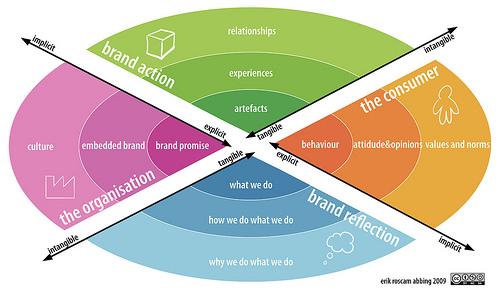
On more than one occasion I have been asked this question and the person asking has then quickly followed up the question with the statement, “it’s the logo isn’t it?” 


Well, in all honesty, the logo is just a small part of what makes up a brand. The logo is more of a device that helps represent the actual values of a company.


To take this further, a brand is a companies’ personality; how it differentiates itself from the competition, its perception in the market place and there are a number of elements that contribute to this. Any marketing activity a company undertakes must be consistent to provide clarity. By this I mean, your organisation should stand for something – it should have a clear USP with which you are permanently associated.


Also, and it may sound obvious, but your company must exude a positive perception that is both unique and appealing. In my experience, a company will too often plumb for a common claim and simply becomes a ‘oh no, not another one’ rather than a ‘brilliant, I will get in touch.’

A great deal of successful brands are able to differentiate themselves from the competition quickly and effectively gaining the maximum number of prospects (and existing clients) for the minimum amount of effort.


My check list in creating your brand is 

Who are your target audience? – define you TA in terms of sector, seniority, location etc
What are their real needs? – markets are becoming more and more fragmented so divide your services or specialise if need be.
Who does your competitor use? – really get to know your competition. It is essential you have the answer to ‘what should I switch to you?’
How do they choose? – who makes the decisions? who is involved? where are they getting their information on which they are basing their decision?
How does your competition operate, how do they present themselves, how are they positioned?

Then…..
Where do you want to be in relation to this? – this is your USP.
What are your strengths and weaknesses? – do a SWOT and either capitalise on your strengths or eliminate your weaknesses.
Do you need to change direction?
If so, what are the implications? – i.e. you might want to pause a marketing push.


Some of the above might not be answerable, but research your market, invest time, money and energy to give your business an advantage. And of course……………use an outside Consultant to gain objectivity!

There is no magic formula to successful marketing. Is there?

It’s another Monday morning and I have been thinking about what write today that would help my readers with their marketing. Racking my brains, I recall having written many times about particular marketing initiatives like direct mail, e marketing and advertising. I have written many posts on how to improve organic listings within search engines as well as tips and advice on areas like SEM and SEO. What is left?

It struck me that one area I haven’t written about is how much time and money an SME should allocate to marketing and what to expect in return.

Why is this? Well, in my experience, it is virtually impossible to do this. I don’t think there is a magic formula that gives the answer to these most common of questions. I have lost count of the amount of times I have been asked ‘how much do I need to spend on marketing’ and/or ‘what can I expect in return?’ When I reply that marketing is like a small bonfire; something that requires regular attention; something that requires nurturing; something that doesn’t burn on its own, I generally look back at blank and frustrated faces that are sometimes disappointed that I cannot give a definitive reply.

My advice has always been to prospects and clients to dedicate time to build marketing. If you are not a marketing person, bring in someone who is. Work with this person. Put together a plan. Test things. Be consistent. But above all, be flexible and open to trying new things. After all, how many of us weren’t even using social media 1-2 years ago? How many of us used to place adverts in the Yellow Pages and/or local media and then sit back with our fingers crossed waiting for the phone to ring?



In short, there is no magic formula to marketing. In my opinion, marketing is about laying foundations, setting parameters, adding value to the process and being consistent in the tone of what is being projected. It is about managing your businesses reputation and being at (or near to) the top of the list when a prospect needs your services.

Do you agree?

30 Questions to test you and your business

1 Can you and your team name three things that set you apart from the competition?
2 Do you communicate the benefits of your product or service in all of your promotional literature, websites, letters etc?
3 Have you tested Telemarketing to attract new customers? Did you accurately measure the results?
4 Have you tested Direct Mail to attract new customers? Did you accurately measure the results?
5 Have you tested PR to attract new customers? Did you accurately measure the results?
6 Are your ads powerful direct response ads that compel the reader to contact you – or are they mundane like all the competition?
7 Do you advertise in certain publications just because your competitors do? Social Media - Do I or don't I?!?
8 When you speak to a potential new customer, do you use words that set you apart from the rest and immediately capture the customer’s attention?
9 Have you tested pay per click search engine advertising?
10 Have you tested Internet Advertising?
11 Do you send regular email communications to your customers and prospective customers?
12 How much time each year do your key team members spend learning leading edge sales skills?
13 Do you have an excellent lead generation process in place?
14 Do you set up an ongoing communication with qualified leads consisting of phone calls, letters and emails?
15 Do you obtain and use testimonials from your best customers?
16 Do you have an excellent referrals systems in place?
17 Did you know there are more than 90 ways of obtaining referrals?
18 Do you offer something of value to your website visitors in exchange for their contact details?
19 Do you know how to write a press release to instantly grab the attention of the person reading it?
20 Do you personalise your email newsletters?
21 Do you know the most important piece of marketing information there is – your clients’ birthdays!
22 Do your team understand that the best way to sell is to ask questions?
23 Do you rent or purchase mailing lists of your target customers?
24 Do you take amazing care of your current customers?
25 Do you know why it’s important to include a ‘PS’ in all of your sales letters?
26 Do you communicate by mail, email and telephone on a frequent basis to your current customers to ensure they know what you have to offer?
27 Do you use just one or two ways of marketing to promote your business? Do you know why you should be using between six and ten?
28 If you used ten ways to market your business have you any idea how wealthy you would be?
29 Did you know that if you follow up a mailshot with a phone call you can increase response rates by 100 – 1000%
30 Do you realise that your competitors probably answered ‘no’ to even more questions than you did!

Now here’s a Free Tip. Pick just three of the above that are important to you and take some action today to improve those areas. Print out this article and come back to the checklist in the weeks and months ahead. You can use it as a very good way of measuring your progress as you implement the marketing strategies that are going to make a difference.

Marketing in a recession…

In my never ending attempt to educate clients about the importance of marketing in a recession, I came across an article by Mark Bower that pretty much sums it up.

His summary is bang on so I have copied it –

‘In summary, the role of marketing during a recession is more important than ever. But we aren’t talking about merely implementing a fancy new poster campaign or popping an ad in the local paper here. This is a time for proper ‘back to basics’ marketing in its purest form. It’s a time to ask – possibly for the first time in quite a while – some of those big, scary questions about who we are and what we really offer as a business and to take a long, cold, hard look at what we need to do to make ourselves stronger, better, faster, smarter and more relevant.’

Businesses – You don’t need to contact a large ‘agency’ who will offer you all sorts of unwanted and unnecessary creative campaigns. What I suggest is contacting an experienced consultant who can objectively help your business set goals and implement the strategy behind achieving them.

Why doesn’t my site appear organically on Google??!

A recent article I saw on Article Maker that pretty much sums up the 5 basic steps to getting your website in the best condition to be found on Google and other search engines. There is no single initiative that will tick all the SEO boxes and don’t be fooled by anyone selling inbound links to your site from someone in India posting your domain name onto link building sites!

If you want the 5 ways look at relevant content, keyword optimisation, link popularity, link quality and article publishing.

Bath Marketing suggests that you work with your web designer and marketing people to lay the foundations for a conclusive online strategy.